
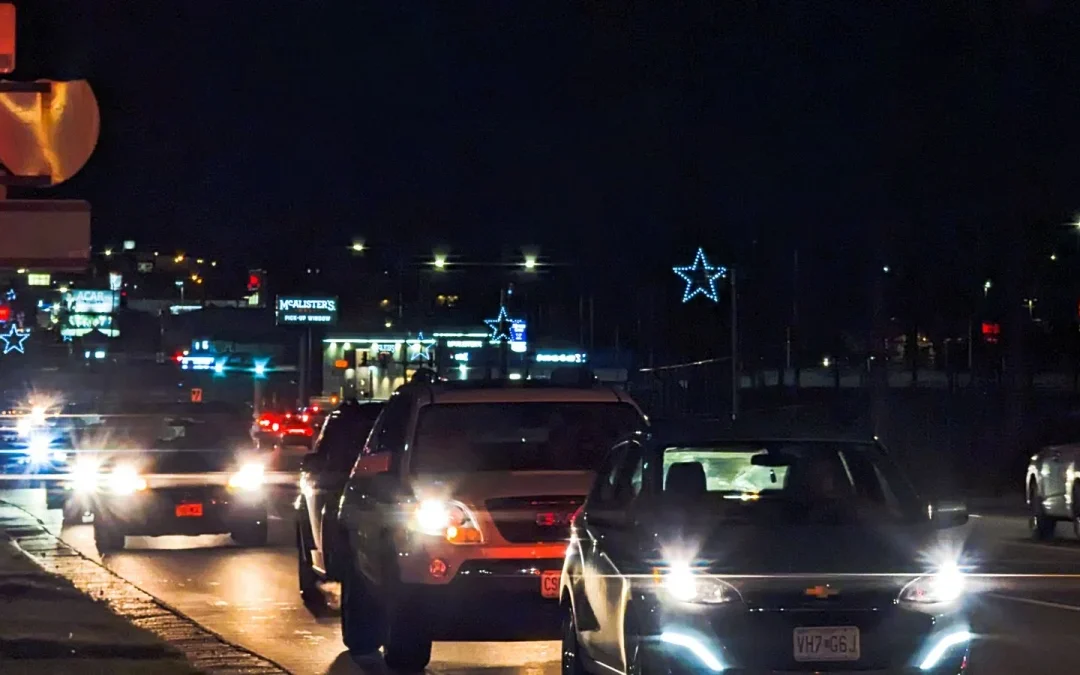
Yes, the risk goes up, mostly for people walking and driving in the early evening. When daylight saving time ends on Sunday, November 1, 2026, sunset in Orlando moves from 6:41 pm to 5:40 pm overnight. The evening commute suddenly happens in the dark, and darkness is where most deadly pedestrian crashes happen.
Nothing about the roads changes that weekend. The light does. And for a few weeks, drivers and pedestrians are still moving on a schedule built for sunlight.
Why are car accidents at night more dangerous?
Night crashes are more dangerous because drivers see less, react later and are more often tired or impaired. Low beams only light a short stretch of road, so a person in dark clothing or a car without its lights on can appear with very little warning.
The numbers back this up. In 2023, 77 percent of pedestrian deaths in the U.S. happened in the dark, according to the National Highway Traffic Safety Administration. Most of them happened in urban areas and away from intersections, which describes a lot of Florida’s wide, fast suburban roads.
Eyes adjust slowly, too. Glare from oncoming headlights on a road like I-4 or Orange Blossom Trail can leave you half blind for a second or two. At 45 mph, that’s more than 60 feet of road you didn’t really see.
What is the most dangerous time to drive?
The most dangerous time to drive is the evening, from about 6 pm to midnight. Federal crash data analyzed by the Insurance Institute for Highway Safety shows that this six-hour window accounts for about one third of all U.S. crash deaths.
| Time of day | Share of U.S. crash deaths, 2024 |
|---|---|
| 6 am to 9 am | 9% |
| 9 am to noon | 9% |
| Noon to 3 pm | 12% |
| 3 pm to 6 pm | 15% |
| 6 pm to 9 pm | 17% |
| 9 pm to midnight | 16% |
| Midnight to 3 am | 12% |
| 3 am to 6 am | 9% |
Source: IIHS Fatality Facts 2024, yearly snapshot, based on federal FARS data.
Saturday is the deadliest day of the week in the same data. Put those two facts together and a Saturday evening drive home in November is about as risky as ordinary driving gets.
Hurt in a car accident or dealing with back pain?
Our chiropractic team sees patients at 8 clinics across Florida, and we accept PIP insurance for auto accident care.
Do car accidents really go up after the clocks fall back?
For pedestrians, yes. A Carnegie Mellon University analysis by Paul Fischbeck and David Gerard of U.S. deaths from 1999 to 2005 found that people walking in the evening were nearly three times more likely to be struck and killed in the weeks after the fall time change.
Their numbers were stark. There were on average 37 more pedestrian deaths around 6 pm in November than in October, a 186 percent jump. (The Seattle Department of Transportation summarized the study for its own safety campaign.)
Here’s why that matters in Florida specifically. Look at what happens to the light in Orlando that weekend:
| Date (2026) | Sunset in Orlando | What it means at 6 pm |
|---|---|---|
| Saturday, October 31 | 6:41 pm | Still daylight |
| Sunday, November 1 | 5:40 pm | Already dark |
| Monday, November 30 | 5:28 pm | Dark for over half an hour |
Sunset times from timeanddate.com for Orlando, Florida.
Now compare that with state crash data. The Florida Department of Highway Safety and Motor Vehicles reports that from 2019 through 2023, the single most common hour for pedestrian crashes in Florida was 6 pm. So the hour that goes dark on November 1 is the same hour Florida already sees the most people hit by cars. That overlap is the real story of the time change here.
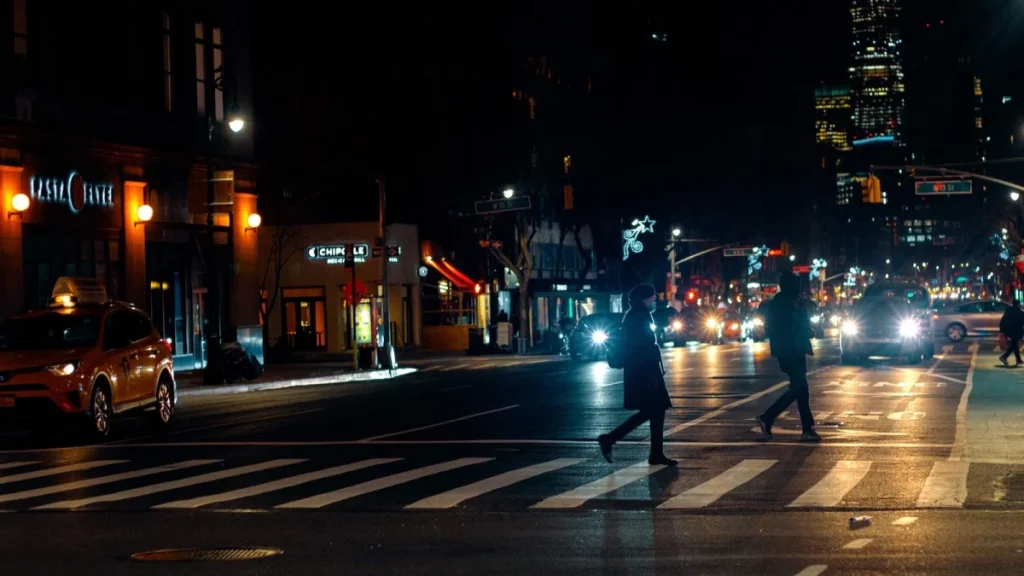
Are Florida pedestrians at higher risk this time of year?
Florida pedestrians are already among the most at risk in the country, and shorter days add to it. NHTSA counted 771 pedestrian deaths in Florida in 2023, a rate of 3.41 per 100,000 people.
FLHSMV’s own figures show 12,223 pedestrian crashes in 2024, with 706 people killed and 1,354 seriously hurt. Those are people walking home from a bus stop, crossing to a store, or heading to the parking lot after work.
If you drive in Orlando, Kissimmee or Jacksonville after dark, slow down near bus stops, shopping plazas and mid-block crossings. If you walk, wear something light or reflective and cross where drivers expect you.
Does drowsy driving get worse in November?
The time change can leave people tired for days, and fatigue raises crash risk at any hour. The National Sleep Foundation holds Drowsy Driving Prevention Week from November 1 to 7, 2026, the very week the clocks change.
Official counts badly undercount this problem. NHTSA recorded 633 drowsy driving deaths in 2023. The AAA Foundation for Traffic Safety, using a different method, estimates that 17.6 percent of fatal crashes from 2017 to 2021 involved a drowsy driver, which works out to roughly 6,000 deaths a year. The Governors Highway Safety Association’s 2026 report lays out both numbers side by side.
The gain of an hour on November 1 sounds restful. In practice, many people stay up later, wake at their old time, and drive home in the dark feeling more worn out than they realize.
What should you do after a car accident at night in Florida?
Get to safety, call 911, and get checked by a provider within 14 days. Florida law ties your Personal Injury Protection (PIP) medical benefits to getting initial care within 14 days of the crash, so waiting to see if the pain goes away can cost you coverage.
- Move to a safe spot and turn on your hazard lights. At night, a stopped car is hard to see. Stay out of travel lanes.
- Call 911. A police report matters for insurance, and officers can light and protect the scene.
- Take photos with your flash on. Capture the cars, the road, any lighting problems and the other driver’s plate and insurance card.
- Don’t judge your injuries by how you feel that night. Adrenaline hides pain. Neck and back soreness often shows up a day or two later.
- Book an exam inside the 14-day window. The rule is written into Florida Statute 627.736.
Our step-by-step guide on what to do after a car accident in Florida covers insurance calls and paperwork in more detail, and our page on Florida’s 14-day PIP rule explains how the deadline works.
One detail worth knowing: under the statute, PIP pays up to $10,000 only when a physician, physician assistant, dentist or advanced practice registered nurse finds an emergency medical condition. Otherwise the cap is $2,500. That’s one reason a prompt, documented exam matters.
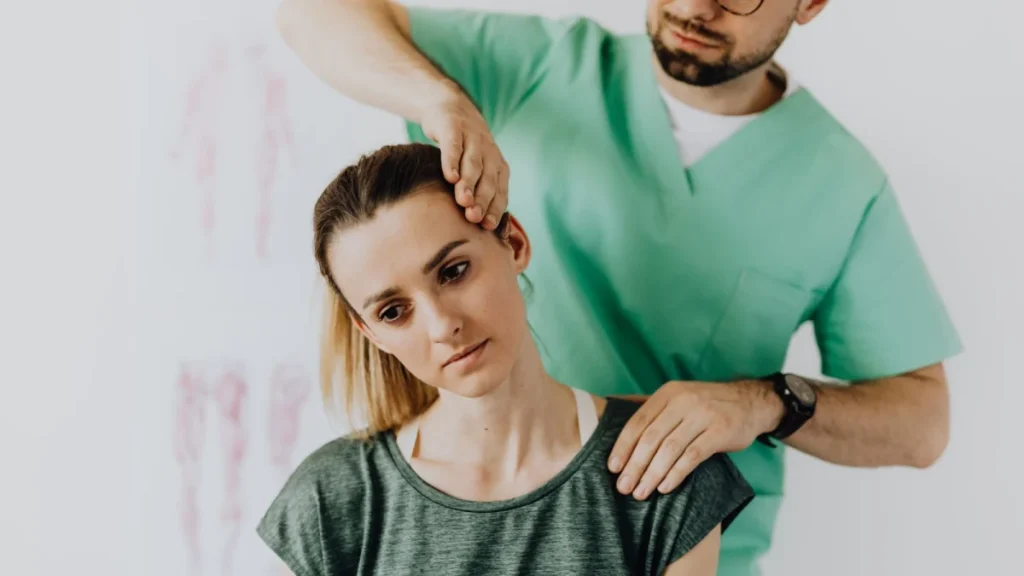
What injuries are common after a nighttime crash?
The most common injuries are whiplash, back strain and soft tissue injuries, the same as daytime crashes, but at night a driver who never saw the other car may not brake at all before impact.
- Whiplash and neck strain. Read more about how long whiplash lasts and what recovery looks like.
- Lower back pain. A sudden jolt can strain muscles or irritate a disc. Our guide to lower back pain symptoms explains which signs need care.
- Headaches and shoulder pain. These often trace back to the neck and can start a day or more after the crash.
- Numbness or tingling in an arm or leg. This can point to nerve irritation and should be checked soon.
Seek emergency care right away for severe head pain, confusion, loss of consciousness, weakness or chest pain.
How can you drive safer after the clocks fall back?
Clean your windshield and headlights, slow down at dusk, and watch harder for people on foot between 5:30 and 8 pm. Small habits make a real difference in the first few weeks.
- Clean the inside of your windshield. Haze that’s invisible at noon scatters headlight glare at night.
- Check that both headlights work and are aimed correctly.
- Look toward the right edge of the road when oncoming lights are bright, not straight into them.
- Add extra following distance. You’ll need it if the car ahead stops for someone you can’t see.
- Go to bed at your usual time the week of November 1 so the extra hour actually helps.
- If you’re drowsy, pull over. Coffee and an open window don’t fix it.
Frequently asked questions
When does daylight saving time end in 2026?
Daylight saving time ends at 2 am on Sunday, November 1, 2026, when clocks fall back one hour. In Orlando, sunset moves from 6:41 pm on October 31 to 5:40 pm on November 1, so most evening commutes suddenly happen in the dark.
Are car accidents more common at night?
More crash deaths happen at night even though fewer people are driving. IIHS data for 2024 shows 6 pm to midnight accounted for about a third of U.S. crash deaths, and NHTSA found 77 percent of pedestrian deaths in 2023 happened in the dark.
How long do I have to get care after a car accident in Florida?
Florida's PIP law requires initial care within 14 days of the crash to use your PIP medical benefits, and a chiropractic physician can provide that first visit. Booking early also documents injuries that may not start hurting until a day or two later.
Why does my neck hurt days after a minor crash?
Adrenaline and tight, guarding muscles can hide pain right after a crash. As stiffness and swelling build over the next day or two, whiplash symptoms like neck pain, headaches and shoulder tightness often show up. An exam can find the source and guide treatment.
If you were hurt in a crash, Spine & Injury Associates has 8 clinics across Florida, from Jacksonville to Fort Myers, and we accept PIP for auto accident care. Book an appointment or call 407-434-7246.
Ready to feel better? Book your visit today.
8 clinics from Jacksonville to Fort Myers. We accept PIP insurance for auto accident care.